When the mill turn sour
Texts by Michel Tanguy
(c) Romain Bassenne
With his fruit vinegars, Martin Chauche, vinegar maker at the Moulin de la Bresse, has a unique take on this product that new cuisine brought to light in the 1970's. With his experience in the ice cream industry, the artisan is no longer satisfied with a simple infusion: he uses fruit pulp, which he selects from committed producers. A method that gives birth to vinegars with a precise taste, endowed with an incredible intensity of perfume. A singularity that did not fail to seduce the chef David Delsart, former head of a Michelin-starred restaurant at Villa Florentine in Lyon.
Used in cooking as a condiment and preservative, or in medicine for its antiseptic properties, vinegar had to wait until the Middle Ages to become more widespread. It was only during the Renaissance that its main variants, wine vinegar, cider vinegar and the inevitable balsamic, appeared. Pasteur’s work in the 19th century allowed for large-scale production, and from then on vinegar found its place in kitchens around the world.
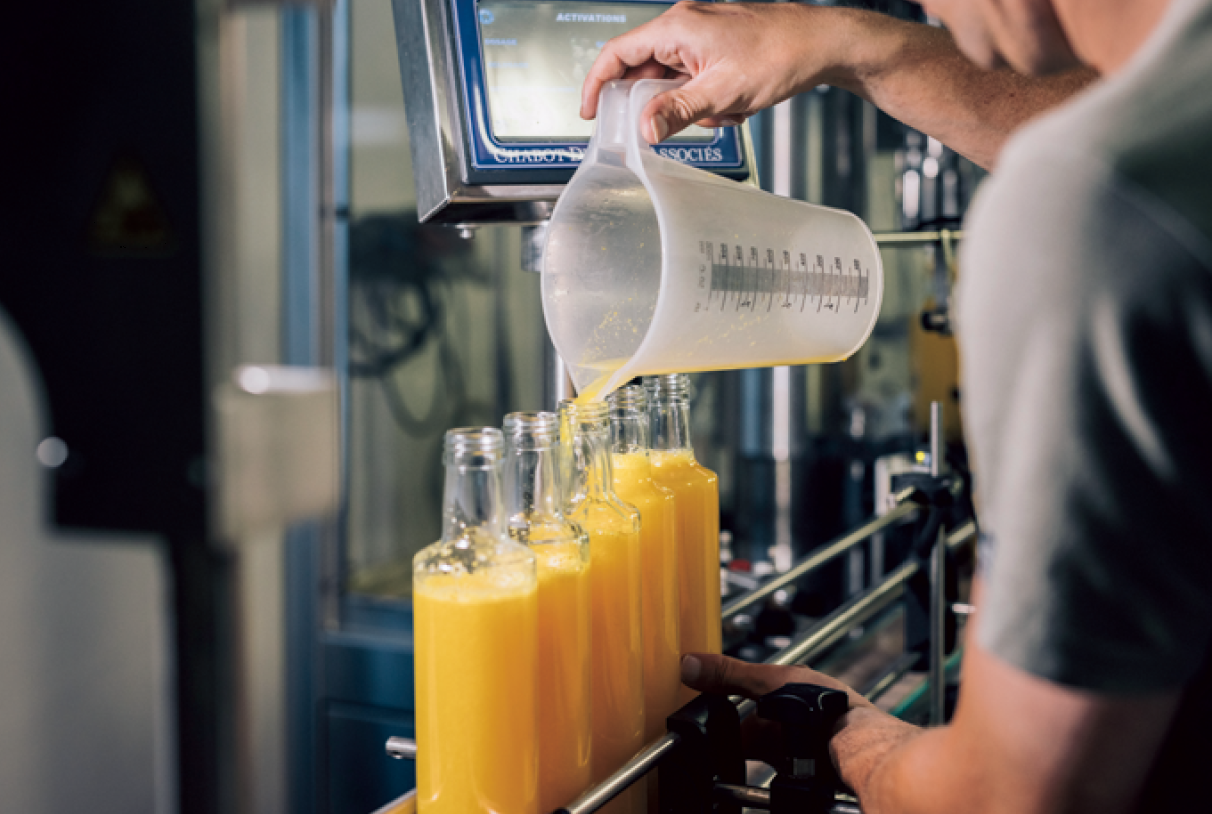
A vinegar to highlignt fruits
Martin Chauche left the world of ice-cream to take over, in 2015, the Moulin de la Bresse founded by Armelle Foatelli-Greffet. "It’s a different craft, but we find the same requirement in the choice of products, the same way to decline them in several perfumes," he summarizes. David Delsart, for his part, looks at the range of vinegars with a chef’s eye: "In our country, we almost never use vinegar as a seasoning, he confides, but only to deglaze or make sauce bases."
The particularity of the Moulin de la Bresse lies in its bias: bet on a very high proportion of fruit in vinegar, to preserve all its freshness and taste. Martin Chauche starts with fruit purées, to which different spices and even herbs can be added. The whole macerates about a week in neutral vinegar, preferably low acid, to let the fruit express itself as intensely as possible. The dosage varies according to the nature of the fruit: the most acidic ones, such as raspberry, require a little less, the goal being always to find the balance in taste, while maintaining a certain texture.
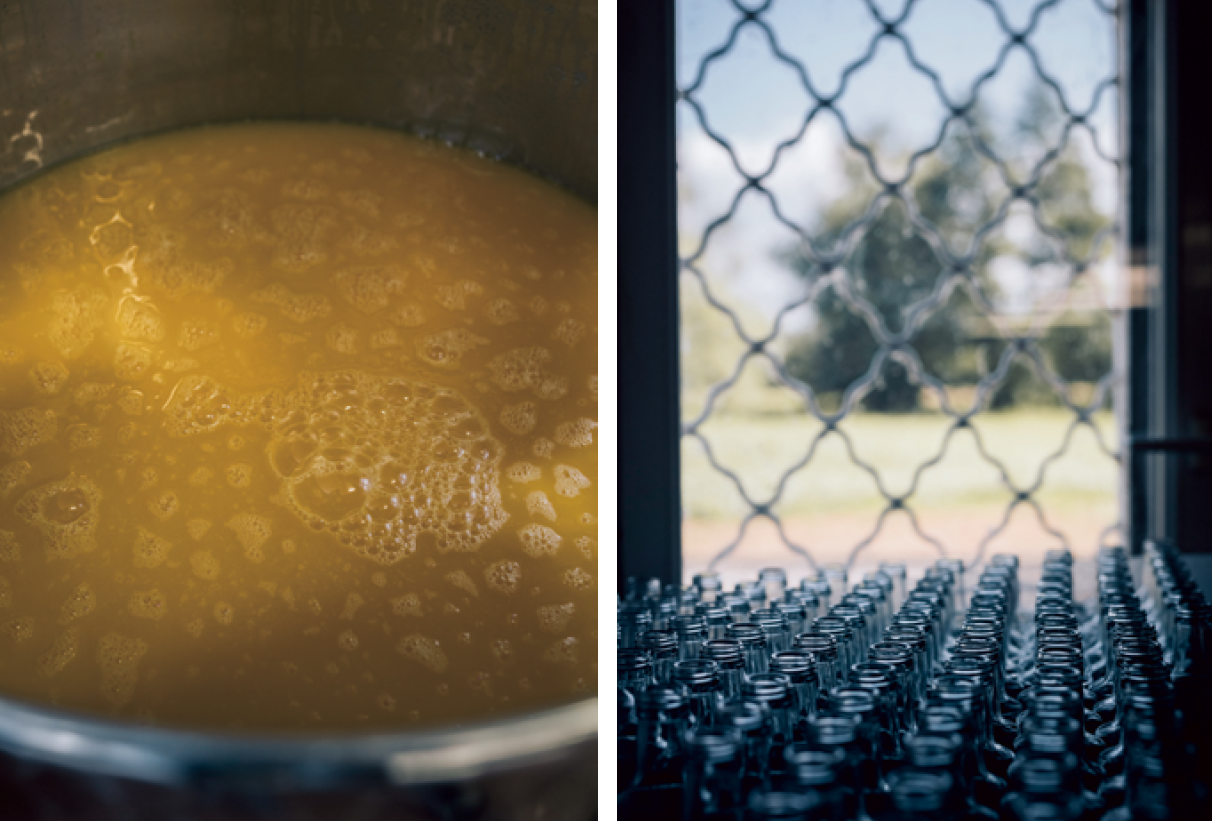
The formats adapt to different uses: 50 cl for professionals, 25 cl and 10 cl for individuals, for a production that never exceeds 200 liters per manufacturing, carried out every other week by a team of three people. Volumes are set to increase in the coming months, while maintaining very artisanal manufacturing. A tip from the chef: keep your vinegar chilled, especially once the bottle is open, to avoid any risk of resuming fermentation above 30°C.
Acidity as common sense
For David Delsart, acidity plays a specific role in a dish: it enhances the aromatic, breaks the feeling of greasiness and restores the palatability, like a fleur de sel on a meat. "The fruit vinegars from the Moulin de la Bresse are used with great care," says the chef. "They don’t cook themselves!" I use it for defrosting, and I recommend adding a last-minute line during assembly to add vibrancy and freshness to the raw fruit.” The chef also explains to Martin how to use his vinegars, especially in the fall. «Blueberry vinegar lends itself perfectly to game deglazing, just like blackcurrant vinegar, which brings out the animal and natural note of the dish. Every season has its accords, he adds: quince or honey in the fall, cucumber in summer to spice up tomatoes."
"I work, says Martin Chauche, with specialized suppliers from the Rhône valley and a farmers' cooperative in the Monts du Lyonnais; for the quality of their fruits but also to support an approach: the pureeing process that makes it possible to add value to damaged or poorly calibrated fruits for sale as fresh fruit." The expansion of the range, with a vinegar with Bresse pepper, started from the same approach: supporting young producers who are reviving a local appellation. The young vinegar maker also mentions his links with Transgourmet, distributor of products from the Moulin de la Bresse. "It is a win-win relationship, as Transgourmet’s clients can thus source their products from small suppliers like us, and we benefit from their client portfolio as an outlet throughout France, where logistical constraints are often an obstacle to working directly with the craft industry.” When talking about new opportunities, the tandem evokes the different -and new- ways of using vinegar, from mixology to raspberry seed oil. A custom-made vinegar for a chef? "Not yet," smiles Martin Chauche, "but it’s clearly the kind of project that could interest me."
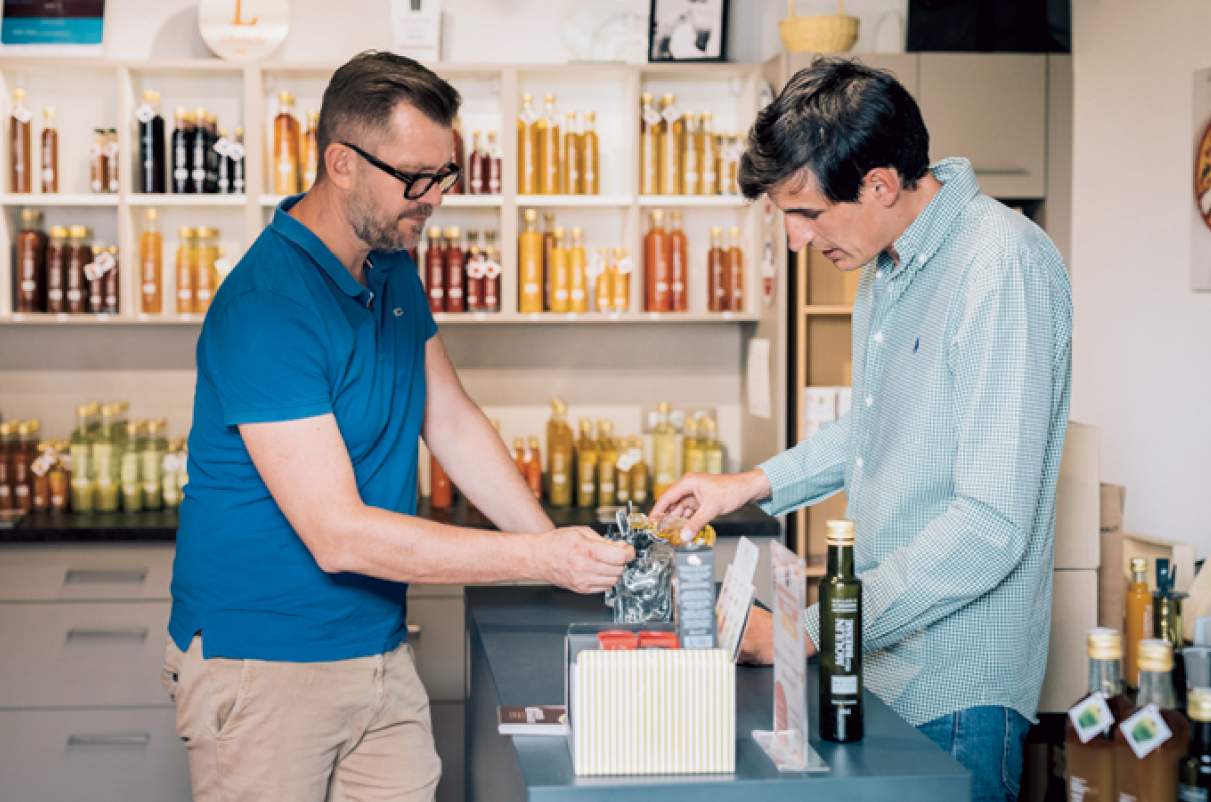
The vinegars of the Moulin de la Bresse to be found at Transgourmet, in 500ml format:
Kalamansi vinegar (707544)
Cucumber vinegar (707545)
Passion Fruit vinegar (707546)
Tomato vinegar (707548)
Mango vinegar (707549)
Burgundy black currant vinegar (707550)
Moulin de la Bresse
1050 Route de Béréziat, 01340 Jayat, France