Léa & Elouan Tréhin, from Occitania with love
He is only 24 years old but offers, from the gourmet restaurant Melba that he runs with his wife Léa, a cuisine with a stunning maturity. There, in an old hardware store of the pretty Gard village of Quissac, Elouan, who only started cooking two years ago, sublime the products of the Occitan terroir with brio. Meeting with a barely born but yet already grown-up cook.
By Pomélo
(c) Malo Tréhin
He is only 24 years old but offers, from the gourmet restaurant Melba that he runs with his wife Léa, a cuisine with a stunning maturity. There, in an old hardware store of the pretty Gard village of Quissac, Elouan, who only started cooking two years ago, sublime the products of the Occitan terroir with brio. Meeting with a barely born but yet already grown-up cook.
By Pomélo
(c) Malo Tréhin
You recently reopened your Gard restaurant after renovations and a total overhaul of its identity. Why?
With Léa, my wife, we first opened Melba for the first time in a rather relaxed style. We served bistro cuisine, in a very relaxed setting. Except that, the more time passed, the more my cooking technique refined. Our most loyal customers kept telling me that the restaurant needed to finally take a real gastronomic turn. After hearing each other say it, we decided to completely rethink the identity of the place to bring it into line with my new way of cooking. Last summer, work was done to make the space more elegant and we reopened in September 2025.
%20-%20Malo%20TEHIN%20093.jpg)
When and why did you decided to work in a kitchen?
Originally, I chose the kitchen. I enrolled in a vocational baccalaureate in cooking but I quickly understood that the hierarchical aspect of the brigade did not suit me at all. I decided to abandon this path to pursue a career in the service. It led me to several big houses, like the Ritz in Paris and the Armancette, the five-star hotel in Haute-Savoie where I met my wife who worked at the spa. Together, faced with the professional difficulties we both encountered post-Covid, we set out to open a restaurant in the south of France, where Léa is from. For that, I had to return to my first love: cooking. So I spent the last two years of my life learning, alone, the basics.
Do you think that your autodidacticism is a strength or an obstacle to your professional growth?
I would say that there are as many good as bad things about learning alone. During all my solo learning – which continues even today and will undoubtedly never be finished –, I could not rely on the feedback of any professional. Is it really good? Isn’t it too salty? Or, on the contrary, tasteless? Only my palate and Léa's one can decide. It involves being in a constant state of doubt, which pushes me as much to surpass myself as to trust myself. But, my greatest strength lies, in my opinion, in the fact that I don’t have a mentor! I feel much freer than any young chef who would have worked for ten years with a great cook. I fear for those who are always found a little of the one who formed them on their plates.
What are your culinary landmarks? And your sources of inspiration?
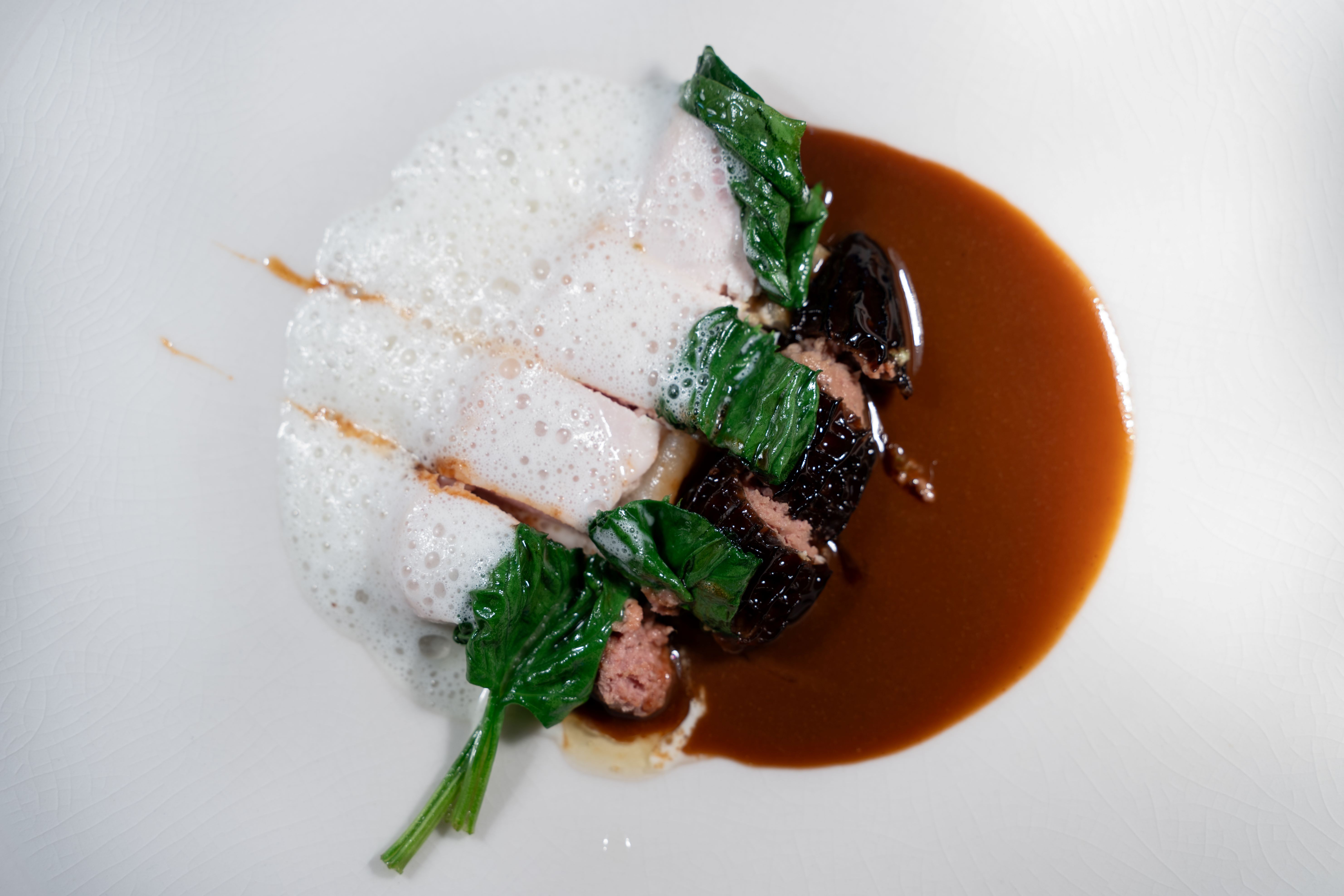
To improve my technique, I always refer to the Repertoire de Recettes by Jean-François Piège (Hachette cuisine, 2023) which is, in my opinion, a reference. To stimulate my creativity, I immerse myself in other cookbooks and in my Instagram feed. I see other chefs doing it and I nourish myself with them. Recently, I saw a few working with sumac. It inspired me a dish combining sumac, red beet reduced like a wine seasoned with cinnamon and dried orange peels, sparkling Jerseyese curd and dried wild flowers.
Are you alone in the kitchen?
I still haven’t reconciled with the concept of a brigade (laughs). So it is unthinkable for me to imagine working with other cooks or, worse, delegating. The idea of transmission makes me completely panic. If I had people under my command, I would somehow become a manager in addition to being a cook. However, it is a completely different profession.
How would you describe your culinary vision, your gastronomic proposal?
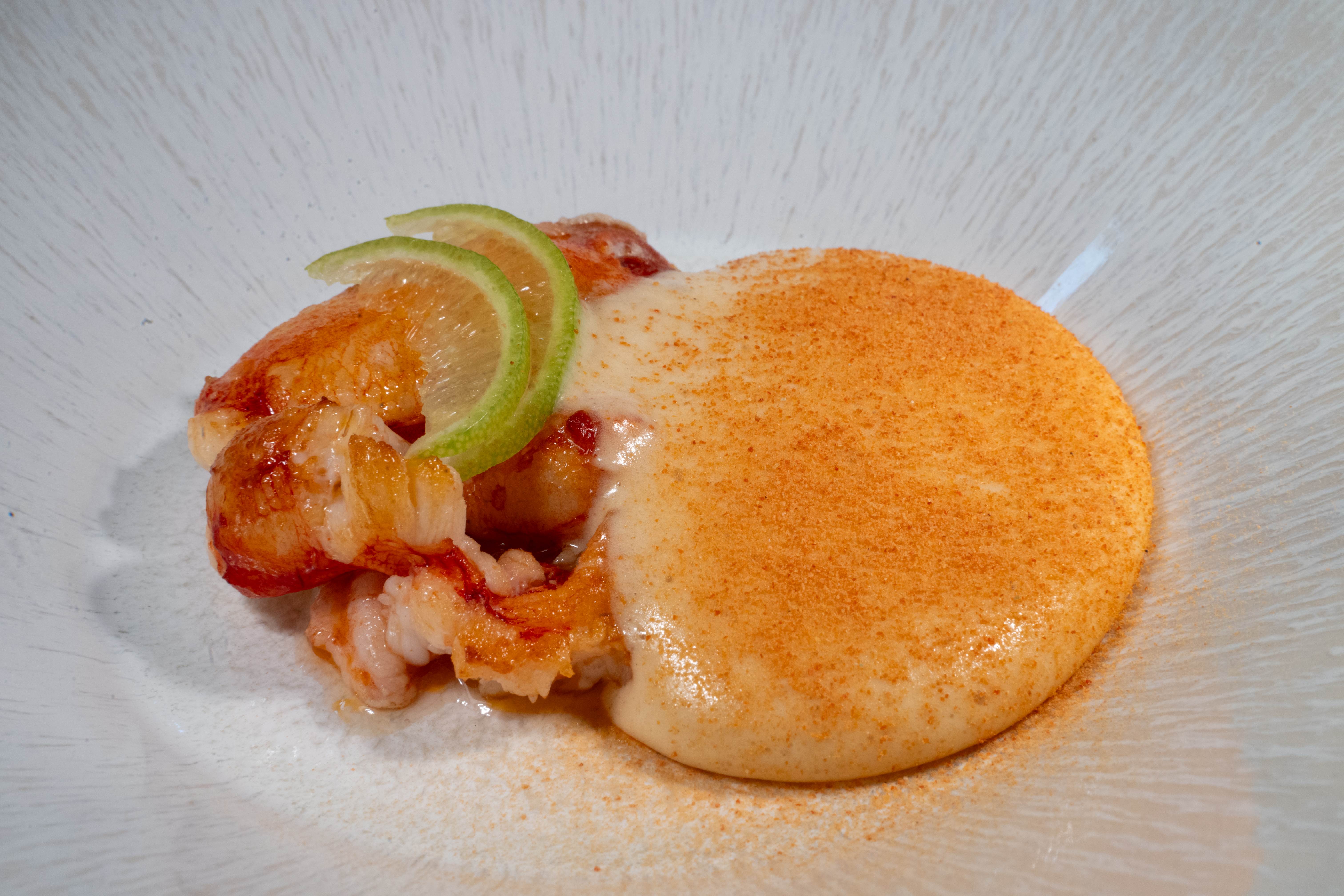
I would say that we mainly serve a cuisine of products. Most of those we use are chosen within a radius of 50 kilometers maximum. Including the drinks, which we wanted ultra-local. Juices like sodas, syrups, beers, and digestifs are all from Occitania. As for the wine, we of course offer a menu that is mostly local, but we are starting to include some references from outside the region to satisfy the locals who want to drink from elsewhere.
Do you have a signature dish?
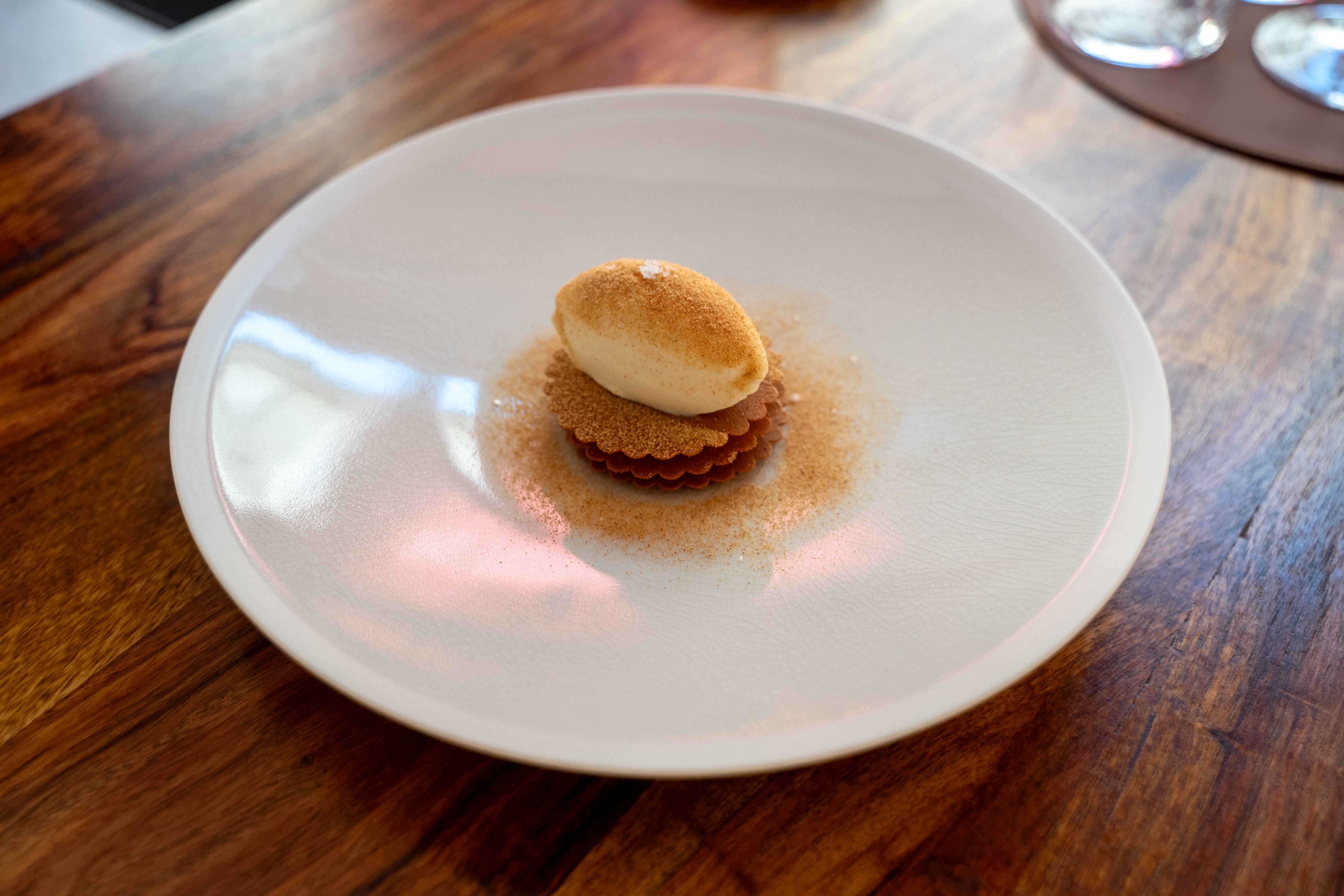
I am very attracted to single-product plates, which I always offer a vegetable variant as an appetizer. For example, at the reopening, I started by working with the sweet onion of the Cévennes in its entirety, making it confit in a Cévenole apple juice, then by dressing it in a reduction of onions water and, finally, by covering it with slices of fried onions in poultry fat. After the onion, I tried the same kind of exercise with squash and, more recently, with Jerusalem artichoke.
You are also a fan of pâté en croûte. Do you find the time to indulge in this passion alongside managing the restaurant kitchens?
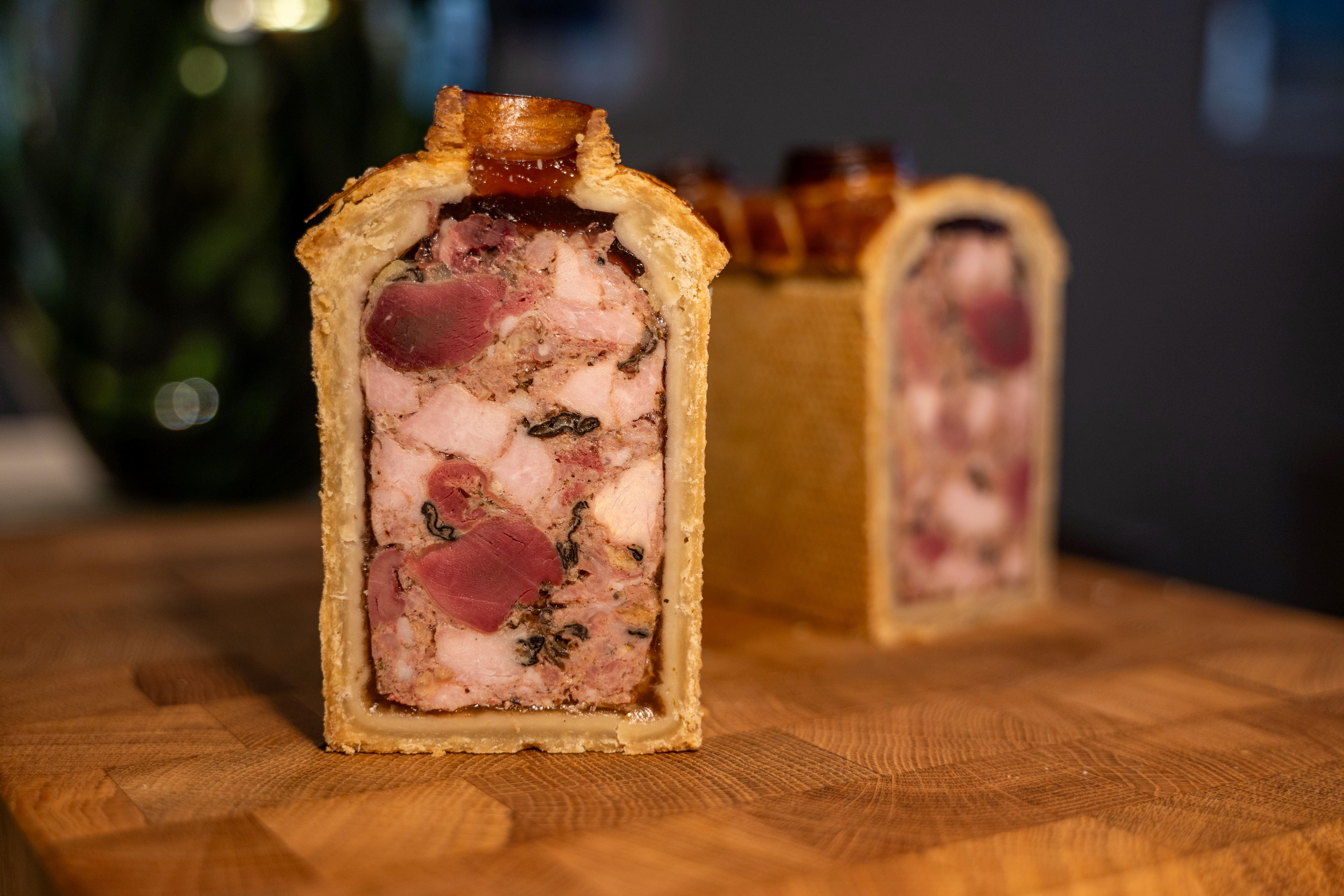
I am a big, big, fan of pâté en croûte, which I also serve regularly as an appetizer. In my signature recipe, there are gizzards of poultry confit, Duroc pork breast and filet mignon, black trumpets, onion confit, roasted chicken skin and Angus beef jelly. Since the reopening of the restaurant, we also offer customers the possibility to order them five days in advance to taste them at home. And the demand has exploded so much during the end-of-year holidays that we have just decided to launch a page on our website, dedicated to ordering. It’s a lot of extra work, but I don’t see myself stopping preparing pâté en croûte in my spare time. It is a meticulous product, which requires a lot of regularity and consistency, a bit like pastry, a discipline that I also love.