Gla(morou)ss, when weird tableware is the new fashion
By Pomélo
(c) Helle Mardahl by Alastair Philip Wiper
On contemporary tables, glass is no longer just functional: it catches the eye, provokes conversation and creates an aesthetic. Colorful, flaky, swollen or deliberately imperfect, it becomes the joyful symptom of a new taste for the strange.
For a long time, good taste at the table was reduced to a form of discretion. Thin, transparent glasses, almost invisible. White plates, polished cutlery, an elegance that above all should not speak too much. But something is going wrong today in the tableware. The glasses begin to swell, to undulate, to tilt. They take on candy colors, disproportionate feet, bubbles, twists, the airs of creatures. After years of minimalism and wine glasses without legs seen everywhere, the table object becomes expressive again, strange, sometimes frankly bizarre.
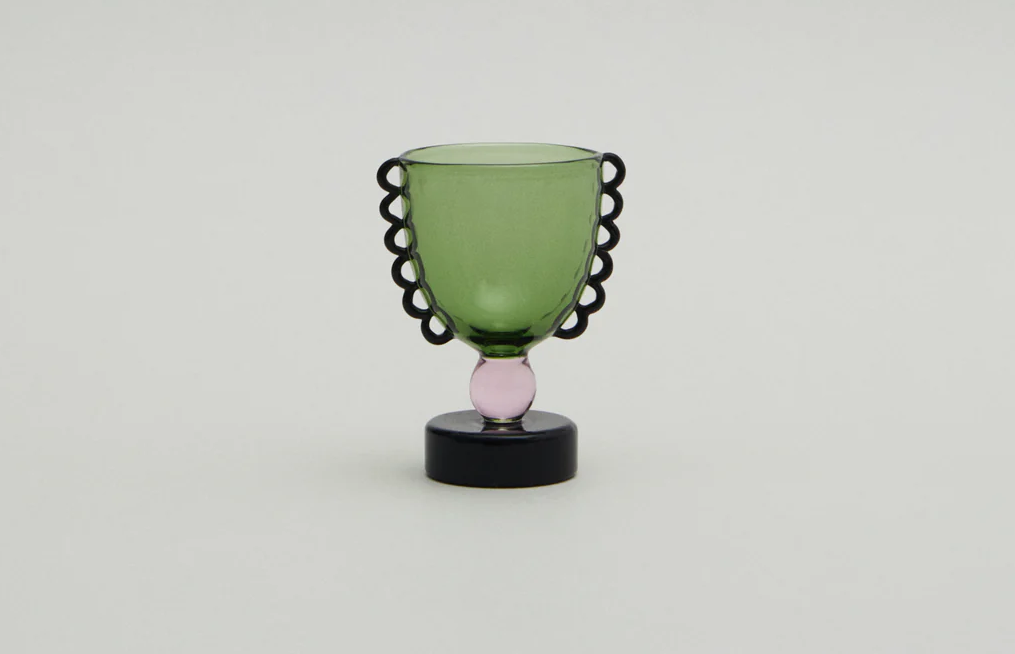
This quirk is not just decorative; it tells us something about our relationship with food, luxury, and beauty. On the most contemporary tables, glass is no longer just a container: it becomes conversation. You notice it even before drinking. It makes you want to touch it, photograph it, ask where it comes from. In a world saturated with smooth images, these dented, colored or deliberately imperfect objects offer a form of joyful resistance. They move the table to the side of the staging, the memory, the slightly twisted dream.
Élisabeth Debourse, editor-in-chief of Le Fooding, analyzed in late 2023 in the specialized media outlet Pomélo: «We’ve seen a lot of things developed, built in recent years, and I think we’re moving toward other things that come out of the box, things that aren’t meant to please and might not be. In ceramics, for example, we see things that are much less smooth, with pieces that are more stringy, thicker, more baroque, dripping, where the error of the hand is more apparent. We have returned, in the tableware, to less aesthetic colors, with the return of dark brown. When I talk about baroque, I have things in mind that are not ugly but intriguing, which can frighten.”
In September 2025, the influential New York Times also addressed the issue with an article entitled Glassware Is Getting Weird and Wobbly—literally, “the glassware becomes bizarre and wobbly.” We notably discover the glass artist Dana Arbib, based in New York, who sums up this desire for singularity when she presents her unique pieces as an antidote to disposable consumption. Unlike interchangeable glass, which is produced in series, his creations claim irregularity. The same logic applies to Helle Mardahl, a Danish artist whose glasses sometimes resemble blown candies, or to Sophie Lou Jacobsen, also in New York, who has largely contributed to putting back into circulation a colorful, undulating, almost pop-like glass. Jean Prounis, also from New York, works on his side with a precious aesthetic, between jewelry and domestic ritual. In France, Margot Courgeon, based in Bordeaux, also participates in this return of a less wise, more sensitive table, where the object can assume its strangeness.
This taste for the bizarre is far beyond the glass. The Lisbon-based Israeli Omer Gilony composes event sets loaded with nostalgia, theatricality and ancient artifacts. His tables sometimes seem to come from a decadent still life: silverware, shells, fruits, dark materials, dried flowers. With the Portuguese house of jewelry and tableware Tavares 1922, she imagined silver pieces, between shell and chicken leg, sold several hundred euros. Again, the object deliberately confuses the categories: is it a place setting, a jewel, a sculpture, a luxurious joke?
The fashion journalist Alice Pfeiffer had prepared the ground with Le Goût du moche, published by Flammarion in 2021. In it, she defends the idea that bad taste is never just a fault: it can be a statement of position, a way to refuse a dominant aesthetic norm. In an interview with Madmoizelle, she explained that "when we talk about beauty, as if there were only one form of it, we designate something extremely normative, specific to the city, coded bourgeois. But it is something that we can deconstruct, decolonize, in order to understand what interpretation of beauty we are talking about. Because it is a construction that can take several forms.”
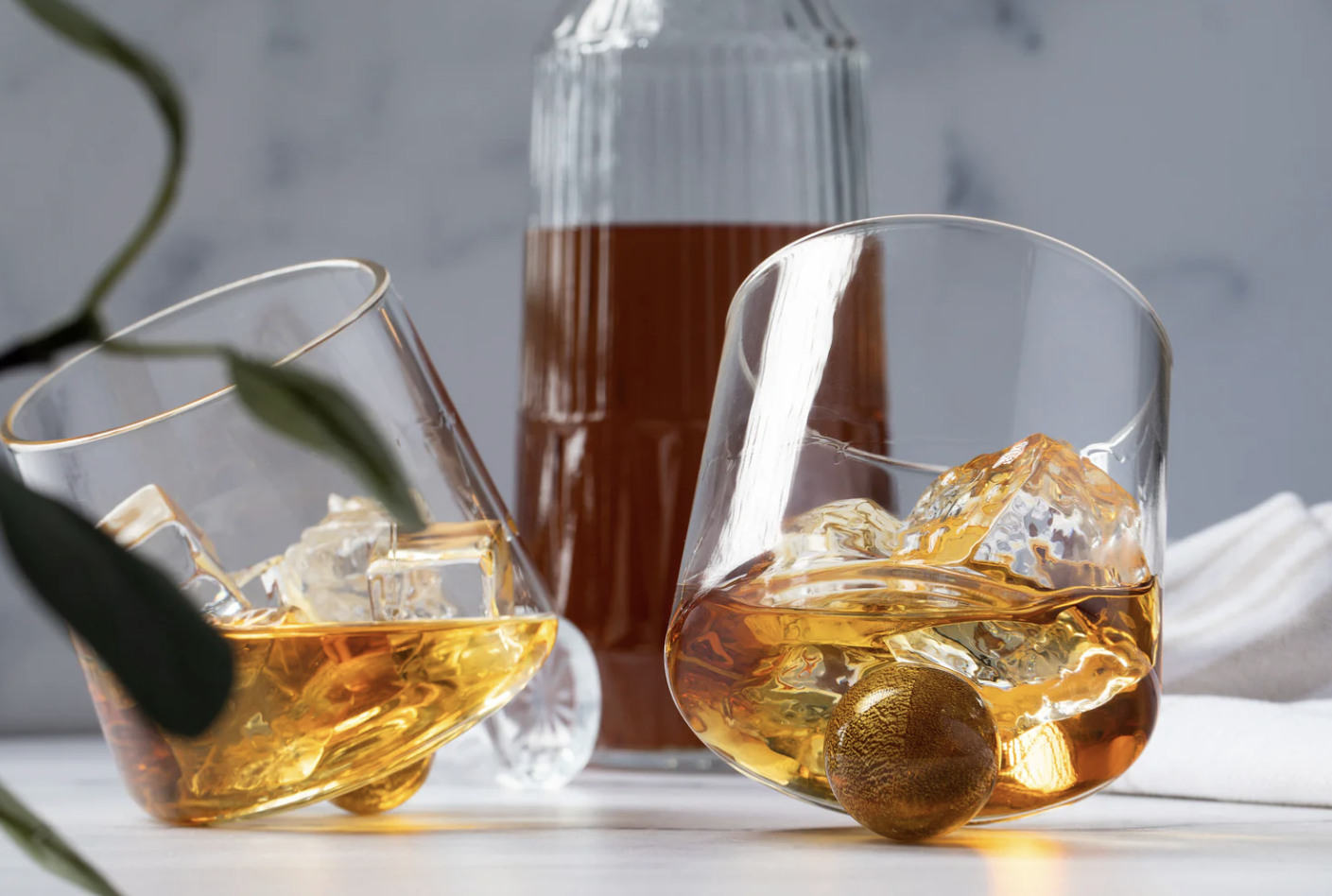
The success of these strange glasses is also due to their emotional power. Cedric Mitchell, a glass artist based in Los Angeles, creates for example cups with bright colors, placed on balls encrusted with 24 carats gold. «In a context of uncertainty and disconnection, there is a craze for decoration that stimulates dopamine. People fill their interiors with objects that spark joy, creativity and exchange," he told the New York Times.
Finally, these glasses respond to an evolution of uses. While alcohol consumption is declining among some of the younger generations, they are used to give panache to a homemade soda, kombucha, non-alcoholic cocktail or infused water. The ritual remains, even when the wine disappears. The bizarre glass then becomes an accessory of celebration without mandatory drunkenness: a way of saying that the party is as much about the container, the gesture and the staging as what one drinks.